In Bhopal, as the festivals like Ganesh Chaturthi and Durga Puja draw near, narrow lanes and open yards transform into bustling workshops. The air smells of wet straw and clay, and the constant movement of artisans working amid bamboo scaffolds. For these artisans from the Kumhar and Prajapati communities, as well as migrant artisans from Bengal, idol-making is more than a craft; it is a livelihood, a devotion, and an identity.
Yet today, this centuries-old tradition faces mounting pressures from unpredictable weather, rising material costs, cramped working conditions, and the absence of basic infrastructure. The question looming over Bhopal’s workshops is whether this heritage can survive when those who sustain it struggle with fundamental challenges of space, dignity, and economic viability.

Idol makers are situated across several parts of Bhopal, including Kolar Guest House, MANIT Square, Mata Mandir Chowk, and Kalibari in Kasturba Nagar. In these concentrated clusters, local families work alongside migrant artisans from Bengal, many of them third-generation practitioners carrying forward ancestral knowledge.
The work follows seasonal rhythms tied to festival calendars. The production of this artwork intensifies during monsoon months leading up to Ganesh Chaturthi and Durga Puja, when demand peaks. This is when workshops transform from quiet spaces into bustling sites, with dozens of idols in various stages of completion crowding every available surface.
Jitesh Prajapati, 29, has been doing this work since the age of 15. Standing in his cramped workshop near Kolar Guest House, surrounded by half-finished idols, clay heaps, and bamboo frames, he points to the fundamental constraint: "If we get a little more space, work would be much easier."
Space is just one issue. The workshops themselves, most are temporary pandals set up for the season, suffer from poor ventilation, inadequate lighting, and a lack of basic amenities. Inside these structures during the summer months, the heat becomes oppressive. Workers describe it as laboring inside a furnace. When the monsoon arrives, bringing relief from heat, it introduces different problems: water seeping through roofs, humidity preventing clay from drying properly, and the constant threat of sudden downpours destroying inventory.
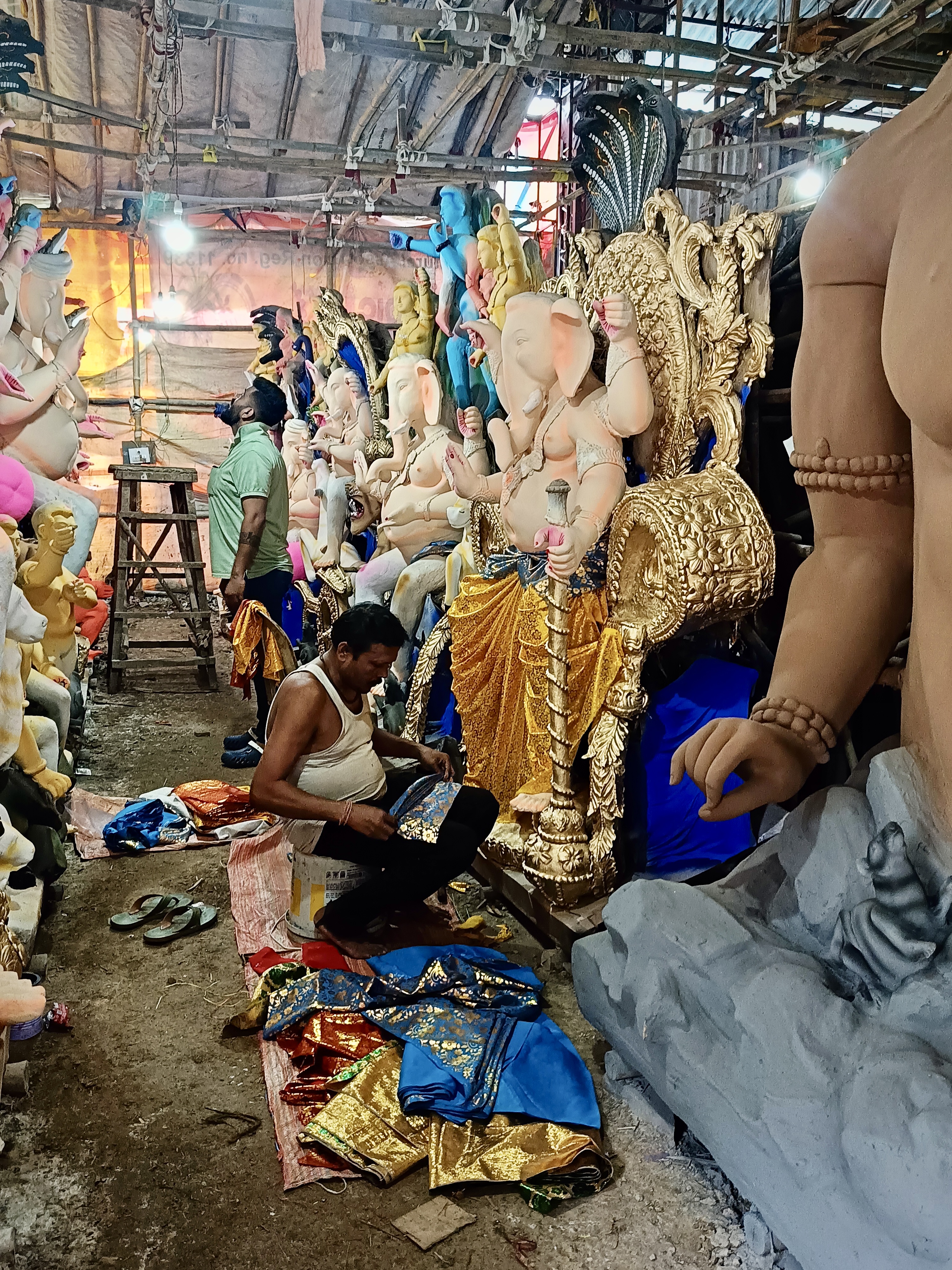
Climate unpredictability has emerged as one of the most pressing challenges facing idol makers. The monsoon patterns that artisans once relied on, predictable timing and manageable intensity, have become erratic. This directly impacts a craft that depends on controlled drying conditions.
When clay absorbs too much moisture, it cannot hold its shape during molding. When rain falls on partially dried idols, thermal shock causes surface cracks. What once required three days for proper drying now takes a week due to increased humidity levels. This compresses production schedules during an already tight seasonal window.
“During rains, half of the idols break,” said 35-year-old Ravi, adjusting a clay figure inside his workshop. “If the government gave us permanent sheds, our work would be much easier.” His words echoed the frustration of many who lose weeks of effort to sudden showers.
The financial impact is immediate and severe. A single unexpected storm can destroy dozens of idols representing weeks of labor and significant material investment. For artisans working on thin margins, where a season's production must sustain families year-round, such losses can be devastating.

The seasonal nature of work makes climate vulnerability especially challenging. Production happens during monsoon months when the weather is most unpredictable. Artisans cannot simply shift their work to other seasons, festival calendars dictate timing. This creates a situation where they must work during the most climate-vulnerable period, with inadequate infrastructure to protect against weather impacts.
Bengali migrant artisans who come to Bhopal for the season face particular vulnerability. They typically spend four months here during peak production, then return home with earnings that must sustain their families throughout the year. Weather disruptions that reduce productive time directly impact their annual income, with no alternative employment opportunities to compensate.
Joy Chitrakar, 27, a Bengali artisan who has been doing this work since childhood, kneads clay with cracked palms, evidence of years in the craft. "This clay is both our livelihood and our worship." he says. For migrant workers like him, every rain-soaked day means not just damaged idols but diminished earnings to take home.

Beyond weather challenges, the basic economics of idol-making have become increasingly difficult. Raw material costs have risen substantially while market prices for finished idols face downward pressure from competition and customer budget constraints.
Clay sourced from regions along the Ganges, essential for creating traditional, durable idols, now costs ₹15,000 to ₹20,000 per tractor load. Bamboo, used for internal structural support, runs ₹50 to ₹52 per piece. Then come costs for straw, chemical paints, natural dyes, and finishing materials. All have increased significantly in recent years.
Ganesh Gharami, 50, lays out the math as he kneads clay in Shanti Nagar: "Clay from Kanpur and Bengal costs ₹10,000 to ₹15,000 per tractor. Bamboo, straw, colors, everything has become more expensive. But the devotion of worshippers keeps our courage intact."
These material costs compound with workspace expenses. Anlus Mandal, 25, says rental costs for four-month seasonal workshops can reach ₹3 lakhs. For small-scale operations, this represents a major fixed cost before any production begins.
Market dynamics add additional pressure. Krishnapal Prajapati, 24, describes a familiar tension: "Some people want idols that take months, others want them quickly and cheaply. We have to balance both." This reflects a broader challenge in traditional crafts, maintaining quality and detail while competing with faster, cheaper alternatives including machine-made and imported idols.

Most workshops are temporary pandals set up for the season, cramped structures with poor ventilation and inadequate lighting. Many lack reliable electricity, making it difficult to work after dark despite pressing festival deadlines. Water access is limited or nonexistent, complicating both clay preparation and basic hygiene. Sanitation facilities are absent entirely.
Most pandals in areas like Mata Mandir and BHEL feel suffocating during peak season, with minimal room to move around as multiple artisans work in close proximity.
Gautam Sardar, 50, who works in Kalibari, Kasturba Nagar, has been in this profession for 20 years. The problems have persisted throughout. "We create the Mother, but don't get mother-like care ourselves," he says. "No water, electricity, toilets."
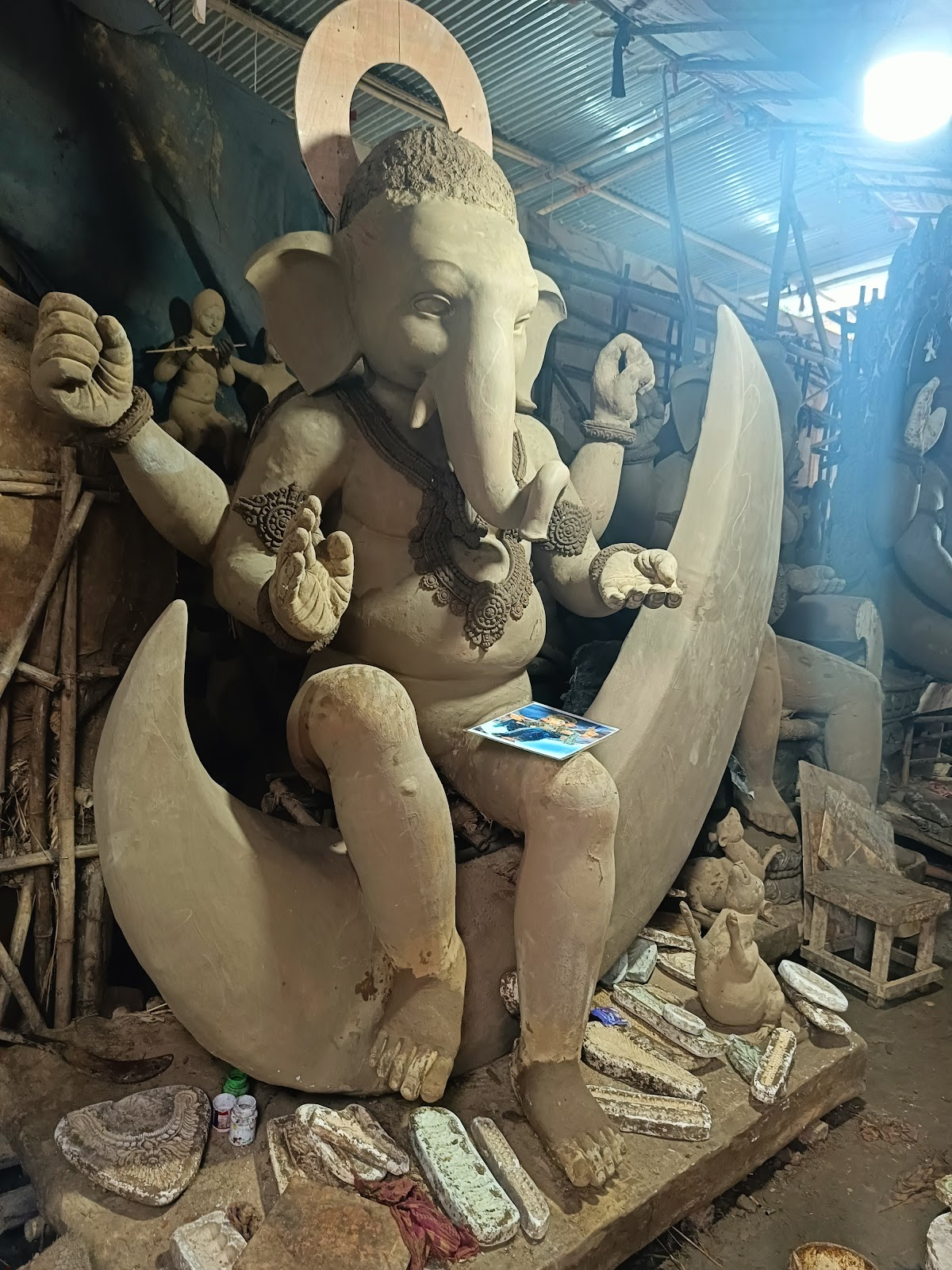
The absence of these basic facilities affects both productivity and health. Inside the cramped, poorly ventilated workshops, conditions become oppressive during the summer months, workers describe the heat as like laboring inside a furnace. Clay dust fills the air. Paint fumes accumulate. The combination of physical exertion in high heat with poor air quality creates conditions that take a cumulative toll on health.
The challenges facing idol makers raise fundamental questions about whether young people from artisan families will choose to continue this craft.
Preeti Prajapati, 45, is one of the few women prominently involved in idol-making in these clusters. As she carefully shapes the eyes of a Durga idol at MANIT Square, work requiring exceptional precision, she talks about the future: "We want our children to carry this tradition forward, but for that, proper arrangements are necessary."

Her concern extends beyond her own family to broader questions of cultural continuity. The issue, as other artisans emphasize, is not just about costs and space, but about dignity, about whether society recognizes skilled craft work as valuable rather than dismissing it as mere manual labor.
Young people from artisan communities observe the struggles their parents face. They see the financial instability, the poor working conditions, the physical toll the work takes, and the limited social recognition for skilled labor. Many choose different paths, pursuing education for other occupations, or migrating to cities for formal sector work that offers more predictable income and better working conditions.
This represents a potential breaking point for knowledge maintained across generations. The technical understanding of clay preparation, the iconographic details specific to different deities, the subtle hand techniques that distinguish skilled work, these pass orally from experienced practitioners to apprentices. As fewer young people enter the craft, this knowledge risks disappearing.
Saraswati Pal, 50, frames it directly: "Only if children find livelihood and respect in this art will they continue the tradition."
The generational question is not only about preserving cultural heritage in abstract terms. It is about whether families can sustain themselves practicing crafts their communities have specialized in for generations, or whether economic pressures and lack of support force them into occupational transitions that break cultural continuity.
The migrant Bengali artisans face this question acutely. They bring specialized techniques from different districts of Bengal, where Durga idol-making represents highly skilled craftsmanship. But working under difficult conditions in Bhopal for compressed seasonal income, many question whether this migration pattern can continue for the next generation.

The artisans are clear about what meaningful support would require. Their requests are specific and practical.
First, permanent covered workshop spaces with basic infrastructure, reliable electricity for lighting and tools, clean water access for both clay preparation and hygiene, and sanitation facilities. These are fundamental requirements for dignified working conditions. Such spaces would also provide crucial protection against the unpredictability of the weather that currently threatens production.
Second, support for raw material costs. Whether through subsidized access to traditional materials or direct financial assistance during peak seasons, reducing the material cost burden would significantly improve economic viability for small-scale operations.
Third, better market connections that reduce middleman exploitation and provide more direct links between artisan groups and buyers. This could improve income while potentially reducing costs for festival organizers and puja committees.
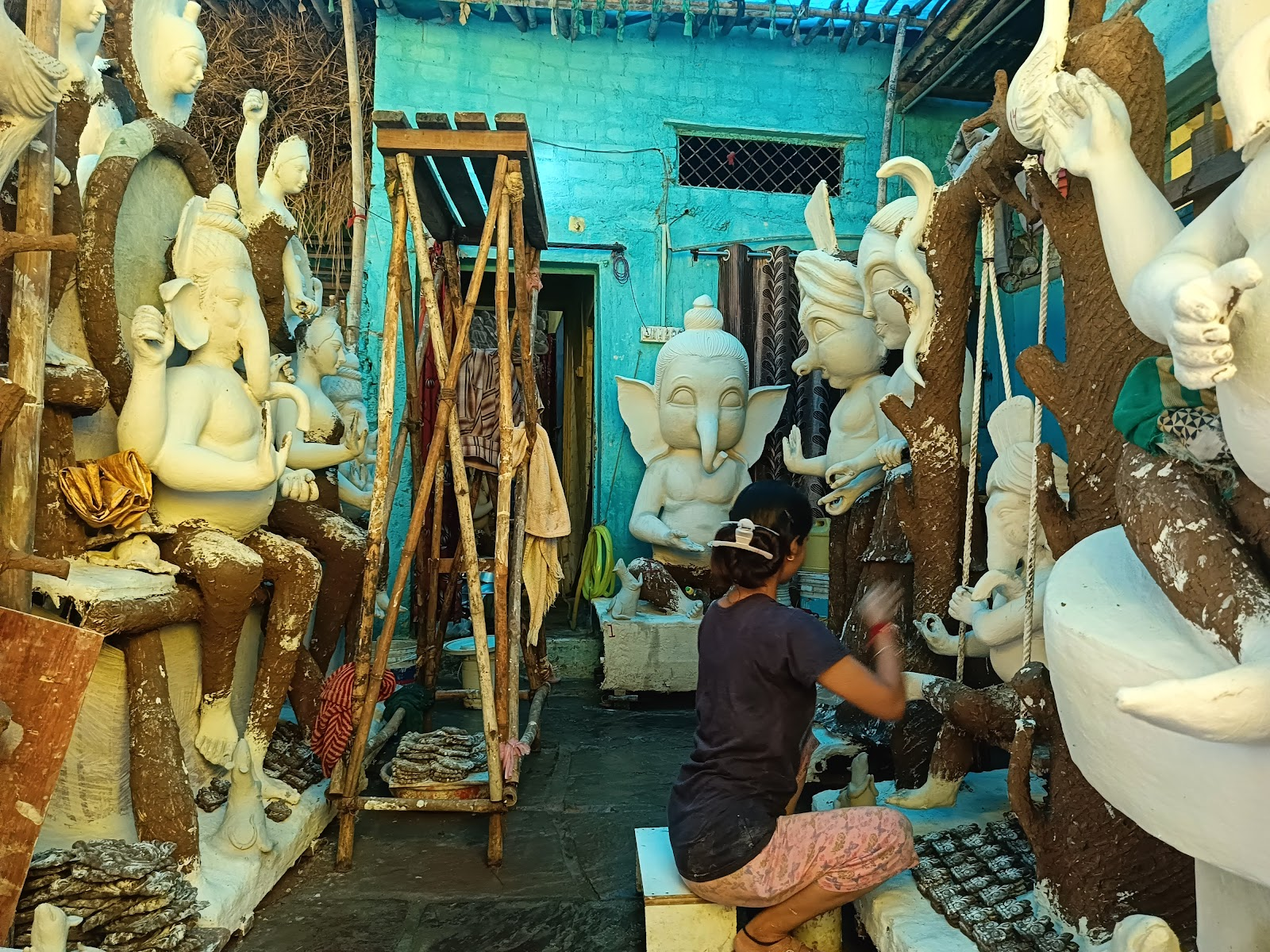
Fourth, recognition of skilled craft work. This means social acknowledgment of idol-making as skilled artistic labor requiring years of training, not mere manual work. It means including traditional artisans in policy discussions about cultural preservation and festival management.
These interventions would not only support individual artisans and their families but would help preserve cultural practices that connect contemporary religious life to centuries of artistic tradition.
Across Bhopal’s workshops, artisans continue to shape clay into sacred forms, their hands guided by tradition and years of experience. Their work connects communities to centuries of devotion and brings livelihoods to many families. Yet the pressures they face, unpredictable rains, rising costs, cramped and unsafe workspaces, and health risks, cast a long shadow over the future of this craft.
The real question is not whether clay and techniques will survive, but whether the next generation will have the space, support, and recognition to carry them forward. Without attention to their basic needs and the value of their skill, more young people may look elsewhere for work, and knowledge passed down through generations risks fading.
The solutions artisans seek are practical: safe, permanent workshops, access to materials, fair markets, and acknowledgment of their skill and contribution. These are not luxuries; they are the foundations that allow a centuries-old tradition to continue. The future of Bhopal’s idol-making depends not only on devotion to the craft, but on the care and respect society shows to those who keep it alive.
Manu Pandey is a admin associate at TA.
Diya Jain is a research associate at TA. She is a recent graduate in economics.
Rishabh Shrivastava is a researcher and writer working on issues of law, policy and development.
TA is a Bhopal-based policy and development consulting group. We are on a mission to make the development space more inclusive and democratic for students and professionals. Join us on this mission.