“Let the husband die, but the earthen pot of water should not be broken.” This is a common saying in Bundelkhand, which illustrates the extent of the water crisis in Bundelkhand. Women, the primary collectors of water, say this often as they spend hours traveling long distances to fetch water.
Bundelkhand, infamous for severe droughts and famines, is located between the Indo-Gangetic plain in the north and the Vindhya mountains from the northwest to the south. The region comprises 13 districts, seven of which are Jhansi, Jalaun, Lalitpur, Mahoba, Hamirpur, Banda, and Chitrakoot in Uttar Pradesh. The other six districts of Datia, Tikamgarh, Chhatarpur, Panna, Damoh, and Sagar are situated in Madhya Pradesh.
The majority of the land area is covered by plains falling below 300 meters. The remaining area is between 300 to 450 meters, with parts of the Vidhyanchal tableland rising as high as 600 meters. This land area is rocky, consisting of black and yellow soil, which are low in organic nutrients, thereby making agriculture difficult.

| Uttar Pradesh | Madhya Pradesh |
| Red Soil - known as Parua | Two types of black soil - known as Kabar and Mar |
| Suitable for growing Wheat | Kabar soil is suitable for growing gram and jowar. Mar is suitable for growing cotton. |
Bundelkhand receives water from the rivers of Yamuna. The Betwa River is extremely significant as it provides water to 50 percent of the region. Ken, a tributary of Yamuna, is responsible for 25 percent of the water source. However, with seasonal fluctuations and reduced capacity of the rivers, water scarcity is felt in the region. For instance, the capacity of the Ken River shrinks to 300 cusecs from 800 cusecs in the region and dwindles to almost nothing in the month of May.
Witnessing a hot and semi-humid climate, the annual average temperature in Bundelkhand is over 25°C. While the temperature in the summer season can rise up to 40 degrees, the weather becomes cooler during the monsoon with temperatures falling to 22 degrees. It is in this season of the monsoon, from June to September, that 75 percent of the rainfall takes place. However, the precipitation that occurs is highly variable and uncertain, causing famines, droughts, and floods.
As a climate-sensitive area, Bundelkhand has been facing rising temperatures and more erratic rainfall. Eighteen out of the past thirty years of droughts have been attributed to climate change by meteorologists. Additionally, India’s First National Communication to the UNFCCC and recent projections by the Indian Institute of Tropical Meteorology show climatic changes (increased mean temperatures and reduction in precipitation) in the area, both in the last 30 years, as well as in the next 60 years.
Agriculture is an important source of livelihood for the people of Bundelkhand. However, with the region experiencing an agricultural drought with the failure of crops, people are constantly pushed into a vicious cycle of hunger and poverty.
According to the Tendulkar Committee Report 2009, levels of poverty in rural areas in India have increased as most people depend on agriculture for their sustenance. As per a report by Niti Aayog, all districts of Madhya Pradesh in Bundelkhand have more than 40 percent of their population living in poverty. Bundelkhand droughts are more than just low precipitation. They are a compounded result of several structural causes, including caste and class-based discrimination, the shift to water-intensive crops, depletion of traditional water structures, and climate change.
Traditionally, crops with long roots like mustard, gram, and pulses were cultivated in the region. These crops have long roots and can survive in arid topography. With the introduction of the high-yielding variety of seeds during the Green Revolution, water-intensive crops like soybean, cotton, and wheat were introduced in Bundelkhand, leading to an increased dependence on water resources in this already water-stressed region. The use of excess water and chemical fertilizers negatively impacted the environment, thereby aggravating the water crisis.
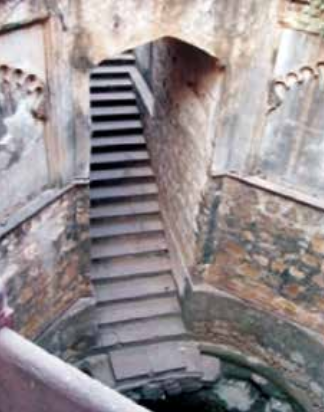
Historically, to reduce surface water runoff and store rainwater, the ruling dynasties of Bundelas and Chandelas built traditional water storage structures. These not only helped in groundwater level improvement but were also responsible for sustainable water usage and encouraged community-level water management.
At present, only 129 out of 1640 of these structures remain; others are filled with silt, and the inlet channels for rainwater are blocked, leaving them with no water.

The disuse of the traditional structures has also impacted the groundwater level. In fact, between the years 2006 and 2016, 60 percent of Bundelkhand’s wells showed a fall in groundwater by 4 meters. Additionally, it was seen that groundwater extraction was highest in the district Mahoba, followed by district Chitrakoot, Lalitpur, and Hamirpur, where it was more than 70 percent. The other districts noted less than 70 percent of annual extraction to annual recharge.
Groundwater exploitation has furthered with the cultivation of water-intensive crops like wheat and cotton, leading to greater dependence on borewells and hand pumps.
Caste-based discrimination is very much prevalent in Bundelkhand. The upper castes get their way with land and financial resources and occupy positions of power. The landless and marginal farmers from the lower caste suffer discrimination, as their rightful access to natural resources as well as government schemes, is taken away.
In Adhiyara village, for example, when a queue of women stood with pitchers and buckets near the water tank, the women of the upper caste were given the first preference. It was only after they had drawn water that Dalit women were permitted to fill water. Caste, therefore, becomes an important aspect when examining access to necessary natural resources like water and land in Bundelkhand.
To conclude, Bundelkhand’s drought is not just a result of natural causes; rather a multitude of anthropogenic reasons are involved. These include poor water management, resource inequality, and inconsequential government interventions.
Reviving the traditional rainwater harvesting structures and ensuring that each household can store water during rainfall is a simple yet effective technique. Less water-intensive crops like millets and grams can be grown in the region. Additionally, as most of the people in Bundelkhand depend on agriculture, creating alternative livelihood opportunities can help inch forward to reducing poverty in the area.
Women’s involvement in collecting water for the entire family needs to be recognized, and they should be involved along with the state and civil society to build impactful sustainable solutions.
Durrain Desnavi is pursuing a Masters in Development from Azim Premji University, Bangalore. She is currently a Research Intern with TA.
TA is a Bhopal-based policy and development consulting group. We are on a mission to make the development space more inclusive and democratic for students and professionals. Join us on this mission.