An evaluation study examining how social audits can strengthen transparency, accountability and service delivery across key welfare programmes related to maternal and child health in Madhya Pradesh.
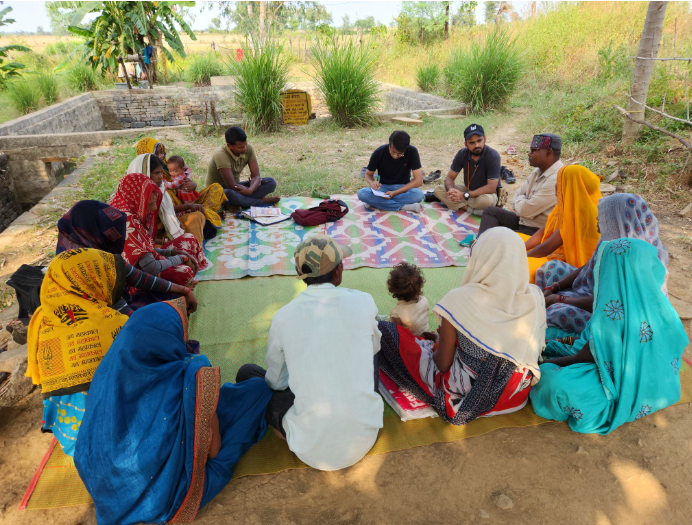

The Analysis (TA) conducted an evaluation of VSS’s Social Audit Project implemented across four districts of Madhya Pradesh, with a focus on maternal and child health and the delivery of key welfare programmes.
Using a mixed-methods approach, the evaluation examined how social audits contributed to improving transparency, accountability and service delivery. The study engaged beneficiaries, service providers, government officials and other stakeholders through consultations, focus group discussions and field observations, alongside a review of policy documents, official records and programme data.
The evaluation also documented VSS’s contribution to developing the social audit framework in Madhya Pradesh and its collaboration with the Government of Madhya Pradesh towards institutionalising social audits.


Image: The Analysis
The study examined the role of social audits in strengthening accountability within welfare programmes and creating mechanisms through which gaps in implementation and service delivery could be identified.
The evaluation looked at how social audits functioned on the ground, how different stakeholders engaged with the process, and their potential to improve transparency and responsiveness in programmes affecting maternal and child health.
The evaluation combined empirical and secondary research to develop a comprehensive understanding of the Social Audit Project.
Primary research included stakeholder consultations, focus group discussions and field observations involving beneficiaries, service providers and government officials. This was complemented by a review of policy documents, official records and other secondary sources.
Quantitative analysis of programme data was also undertaken to understand the project’s outreach and assess patterns emerging from its implementation across the four districts.


The evaluation examined implementation challenges across key welfare programmes, including the Mid-Day Meal Scheme, Public Distribution System (PDS) and Pradhan Mantri Matru Vandana Yojana (PMMVY).
The research identified gaps related to service delivery, accessibility, programme implementation and governance. By bringing together experiences from the ground with programme data and policy evidence, the evaluation provided a clearer understanding of systemic challenges affecting the delivery of welfare services.
With maternal and child health at the centre of the evaluation, the study examined how stronger monitoring and accountability mechanisms could contribute to improving the implementation of welfare programmes.
The findings highlighted the importance of social audits not only as a mechanism for identifying gaps, but also as a means of strengthening engagement between communities, service providers and public institutions.
The project resulted in a comprehensive evaluation report documenting the implementation of VSS’s Social Audit Project across four districts of Madhya Pradesh.
The report brought together field evidence, stakeholder perspectives, programme data and policy analysis, and provided evidence-based recommendations to address implementation gaps, strengthen monitoring mechanisms and improve the delivery of key welfare programmes related to maternal and child health.