Menstrual blood is not just any blood. It is the untold stories of millions of girls and women who bleed in silence, shame, and fear. I know this because I have bled in silence too.
Growing up in a small town of Gaya in Bihar, which is a town vibrant with culture but haunted by deep-rooted patriarchy. My childhood was colorful, but my journey into womanhood was stained with shame.
I was in 7th grade when I attained puberty and got my first period. My white skirt, which was stained red, became a symbol of fear, confusion, and isolation. My family, like many others, navigated poverty and traditions where menstruation was taboo and could never be spoken about.
My mother handed me a cloth rag cut from an old sari. She told me it was natural, but no one told me how to manage it with dignity.
I carried that silence for many years, through biology classes where teachers skipped chapters on human reproduction, through markets where sanitary pads were handed in black polythene covers, as if hiding a shameful secret.
In many parts of India, menstruation is still cloaked in myths. It is often seen as “impure.” Girls are told not to enter kitchens, not to touch pickles and not to visit temples. In homes across Bihar, especially in Gaya's rural belts, it’s common to hear:
- “Kapde alag rakhna, nahin toh sab cheezein ashuddh ho jaayengi.”
(Keep your clothes separate, or everything will become impure.)- “Period mein baithak ya mandir mein mat aana, paap lagega.”
(Don’t enter the living room or temple during periods; it’s sinful.)- “Period mein achaar mat khana, khoon patla ho jayega.”
(Don’t eat pickles during periods; your blood will thin.)- “Istemal kiya pad ya kapda dho kar hi phekna, warna maa nahi banogi.”
(Wash the used pad or cloth before throwing it away, or you’ll never become a mother.)- “Period blood dimag se aata hai, isliye baal dho kar naha lo.”
(Menstrual blood comes from the brain, so wash your hair and bathe to stop it.)- “Periods mein nahana mat, yoni mein paani chala jaayega.”
(Don’t bathe during periods; water may enter your vagina.)- “Periods mein khet mat jaana, fasal kharab ho jaayegi.”
(Don’t go to the fields during periods; the crops will be ruined.)

In such environments, even possessing a sanitary pad is considered a luxury. In fact, only 36% of women in Bihar use sanitary napkins, compared to the national average of 57.6%, as per the NFHS-5 data released in 2020. The rest rely on old rags, sand, ash, or even leaves.
For many adolescent girls, managing menstruation means missing school or staying isolated. The NFHS-5 data released in 2020 reveals that, in Bihar, approximately 41% of women were psychologically not prepared for menstruation, highlighting a significant gap in menstrual education. Only 58.8% of women, aged 15-24 years, in Bihar used hygienic methods of protection during their menstrual period. In rural areas, the usage drops to 56%, compared to 74.7% in urban settings.
It was only when I worked as a Community Resource Person with the Abdul Latif Jameel Poverty Action Lab (J-PAL) in 2011 that my silence broke with an unbearable scream.
I saw rural women in Jehanabad district in Bihar, using cloth rags hidden away in cow sheds, drying them behind moist walls. Worse, some women used sand and ashes as menstrual absorbents.
Many avoided bathing, fearing it would worsen the bleeding or allow blood to enter the vagina. Over time, they suffered repeated infections; some so severe that they led to unnecessary hysterectomies.
My field visits opened my eyes to the extent of misinformation surrounding menstruation and menstrual care among women.
While visiting a rural school in Bodhgaya in Bihar in 2020, a girl hesitantly shared that she used the same sanitary pad for three days straight. She was not aware that it needed to be changed every 6-8 hours. She said, "Didi, mujhe laga pad hai, woh phekna tabhi hai jab period khatam ho."(Sister,I thought a pad should only be thrown away once the period is completely over.)
thinking the sticky side would hold the blood inside.
In village after village, I met adolescent girls who washed their disposable pads before discarding them, believing that visible blood must never be thrown away, for fear that someone might curse them and they would never become mothers.
A year later, I met another woman in Gaya, who said that she did not take baths during her periods to prevent coercion into non-consensual sex by her husband
And then came the deeply uncomfortable questions:
- “Didi, menstrual cup lagakar kya sex ho sakta hai?”
(Can we have sex while wearing a menstrual cup?)- “Cup laga ho toh bathroom ja sakte hain?”
(Can we pee while wearing the cup?)- “Cup laga ke sone se blood upar toh nahi chala jaayega?”
(Will the blood go upward if I sleep while wearing the cup?)
These weren’t mere myths: they were the silent cries of a system that had failed them. And every story tore a part of me, but also built my resolve.
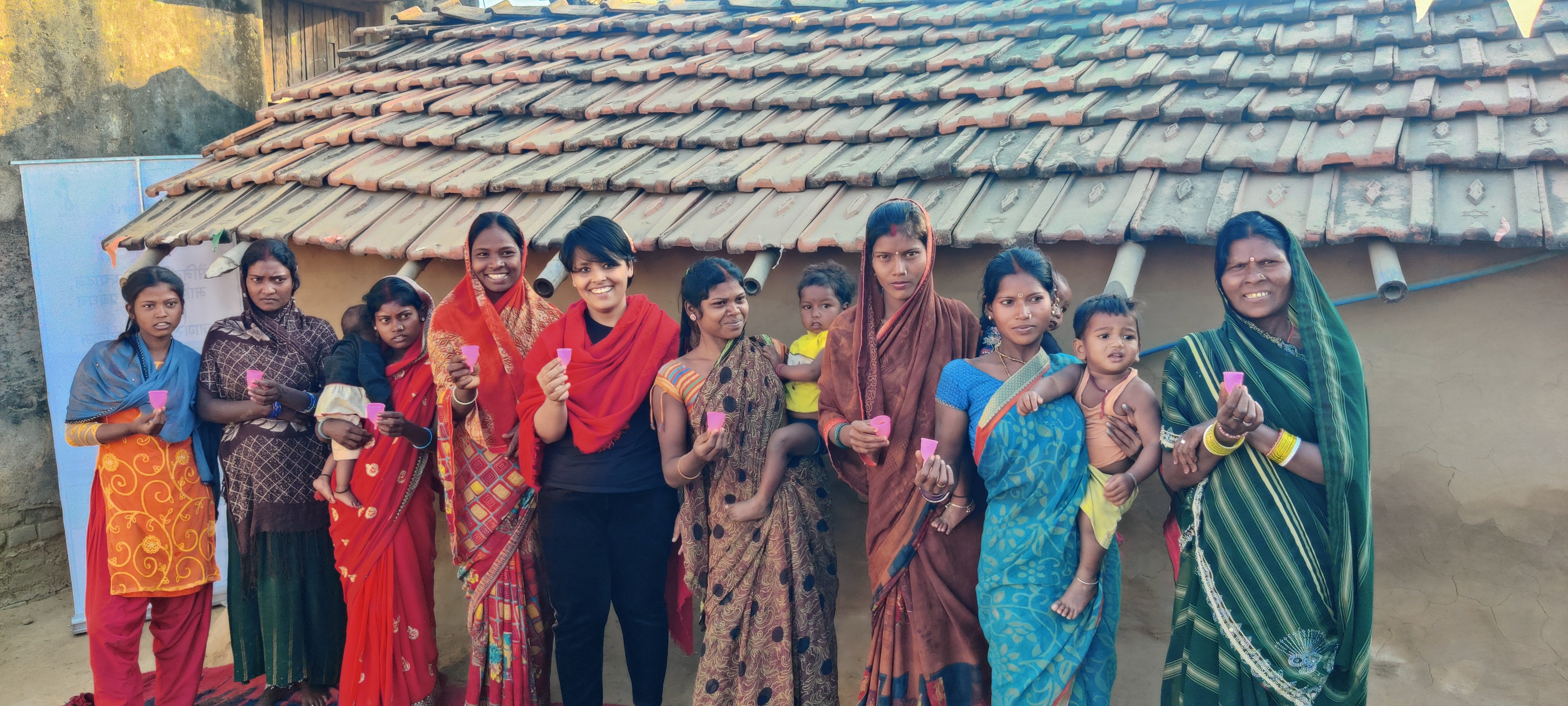
In 2019, I became one of the co-founders of Bihar-based non-profit, SumArth that focuses on empowering rural women and promoting menstrual health. It was a step that allowed me to begin working toward a long-held dream—supporting rural women and girls in reclaiming their menstrual dignity.
Our journey started small and was not without hiccups. We conducted village-level sessions where women would walk away midway, men would abuse their wives for attending, and mothers pulled daughters out, whispering, “yeh toh gandi baatein karti hai.” (She does dirty talk.)
But revolution is born only in resistance.
Today, we have reached over 25,000 women and 5,000 adolescent girls across the Gaya district. Our intervention model includes:
Girls who once whispered about periods now chant slogans in rallies. Women who hid in rooms now lead pad distribution drives.

They take a bath during periods. They say 'no' to forced sex during menstruation. They say 'yes' to their dignity.
Some have gone further. They embraced menstrual cups—these were the same women who once feared the cup would get lost inside them. Today, they flaunt their cups as symbols of freedom.
They say:
"Ab na dard hai, na darr hai. Pehli baar mehsoos hua ki periods ke upar mera control hai." (Neither I fear nor feel the pain. This is the first time I have control over my periods.)
For women working long hours in the fields, the menstrual cup has been a game-changer:
“Cup laga ke kheton mein kaam karna asaan ho gaya hai, poore din ki tension gayab,” (It is easier to work in the fields using menstrual cups during my periods), they tell us.
These aren’t just testimonials—they are transformations.
Menstrual health is not merely a woman’s concern. It is a public health issue that impacts communities. It is a gender justice issue that reflects how we value women. And, above all, it is a human rights issue—because dignity during menstruation should not be a privilege, it should be a given.
What began as an emotional wound in my own adolescence as a red stain on a white skirt, a cloth rag handed in hushed silence, has now grown into a roaring revolution.
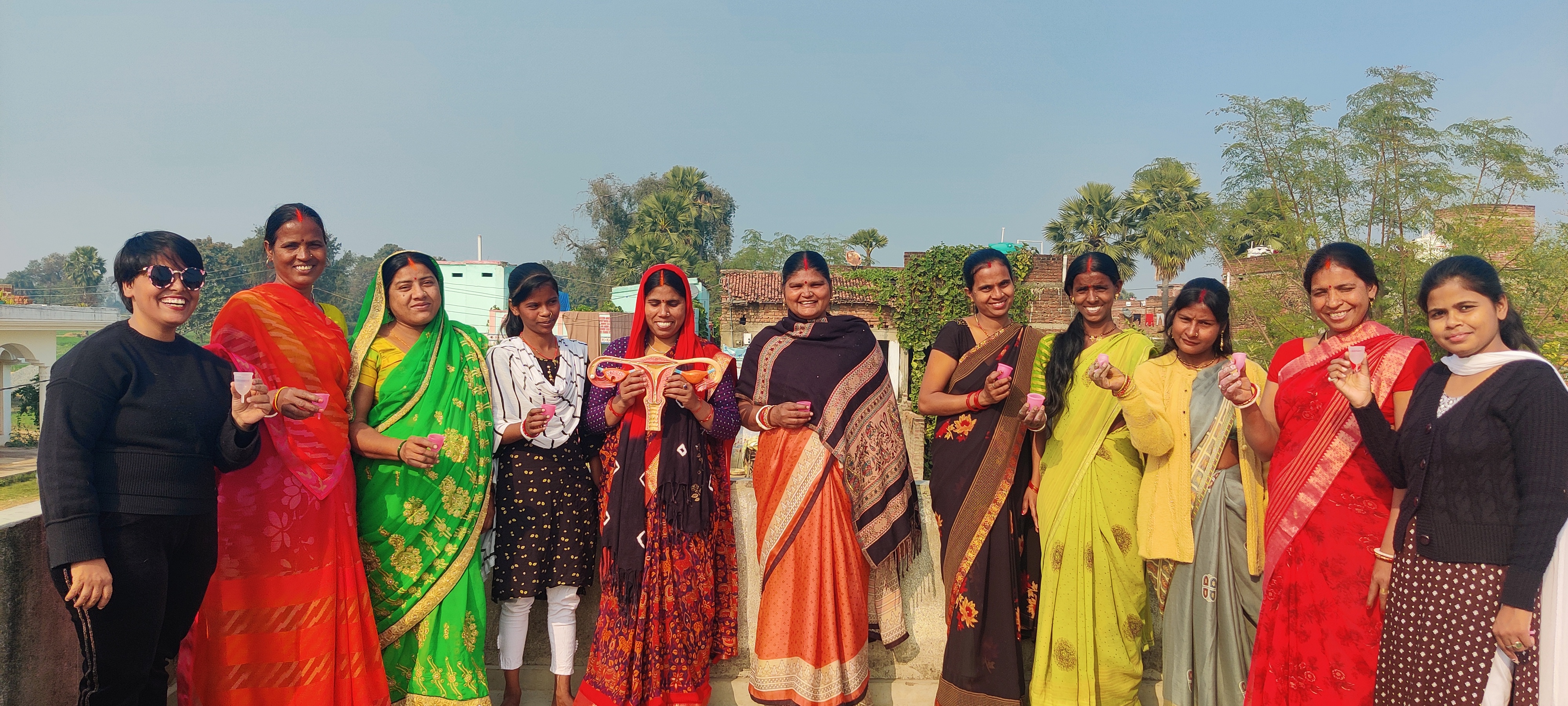
It’s a movement not fought with banners and protests, but with knowledge, courage, and collective awakening. It’s driven by thousands of rural women in Bihar, women who were once shamed into silence, now standing tall and bold to speak, bleed, and lead.
I do this not just as an activist working in menstrual health—I will do this as a mother. I carry this fire not just in field visits or campaign slogans, but in bedtime stories I will tell my daughter. Stories where periods are not something to be hidden, feared, or brushed under a carpet of shame. She will grow up in a home where pads are not passed in black polythene, where menstrual blood is not impure, and where knowledge about her body is her birthright.
She will never have to ask the questions I asked in fear.
She will not flinch when she leaks “blood”.
She will not apologize for her biology.
She will know, with unwavering confidence, her body is not a curse. It is power.And as long as I breathe,
As long as there is one more girl hiding her pain,
As long as shame still walks alongside menstruation in rural India,
I will walk the dusty streets of my Gaya village, to village, school to school, home to home, telling every girl and woman:“Your period is your pride.
Your body is not something to be hidden—it is something to be celebrated.”Because this is not just about pads or cups.
This is about agency and freedom.This is about owning your story, your cycle, yourself.
Surbhi Kumari is a menstrual health advocate and co-founder of SumArth, a social enterprise working in rural Bihar. She has empowered over 20,000 women and 5,000 girls by promoting menstrual dignity, awareness, and access to sustainable products. Her work challenges taboos and fosters health, dignity, and economic independence for marginalized women.
TA is a Bhopal-based policy and development consulting group. We are on a mission to make the development space more inclusive and democratic for students and professionals. Join us on this mission.