BHOPAL, Madhya Pradesh: It is noon in Babanagar, and the narrow lanes of the settlement have fallen unusually quiet. The sun sits high above the tin-roof houses, reflecting sharply off the metal sheets. Inside one of these homes, the air has already turned heavy and uncomfortable.
Rajesh Meena, 30, steps outside and looks up at the roof of his house. By early afternoon, he says, the metal sheets absorb the sun’s heat and slowly release it into the small room below, turning the house into an ‘oven’.
“We have small children, and our life is dependent on the livestock. We have to take care of them extra as if they fall ill, our life became more tougher in the tough, intense heat period,” he says.
For his family, soaking blankets overnight and spreading them across the roof during the day has become a routine during the summer months. The damp cloth cools the tin sheets just enough to make the room inside bearable for a few hours. But relief is temporary.
It is only the start of April, yet the heat already hangs heavily over Babanagar, a densely packed informal settlement situated in the middle of Bawadiya Kalan, one of the posh residential areas in Bhopal.
By midday, many residents step outside their homes to escape the heat trapped indoors. Women sit near doorways under small patches of shade, elderly residents gather beneath the few trees that remain in the settlement, and children roam between shaded corners of the narrow streets.
Most homes here are built with tin sheets or thin concrete slabs. They stand wall-to-wall along cramped lanes, leaving little space for air to circulate. Windows are few, and ventilation is almost nonexistent. As the sun climbs higher, heat trapped by the roofs stays inside the rooms for hours.
Studies on informal housing conditions note that homes in many low-income settlements are built with inexpensive materials such as tin sheets, plastic or tarpaulin roofing, which absorb and retain heat. These materials can trap heat inside small living spaces, causing indoor temperatures to rise sharply and making summers particularly difficult for residents.
Speaking to MP In Focus, Ward Councillor Snehlata Raghuwanshi said, “We are trying to ensure that residents can access pucca housing under the Pradhan Mantri Awas Yojana (PMAY). However, a major challenge is that many are unwilling to relocate far from their current homes, as their livelihoods—particularly domestic work and daily wage jobs—are closely tied to this locality.”
Durgawati Sharma, 70, sits near the entrance of her house, slowly fanning herself with the edge of her sari. The ceiling fan inside continues to spin, but she says it hardly helps.
Scientific studies on indoor overheating further note that poorly ventilated and densely built environments can intensify indoor heat exposure, particularly during extreme heat events, increasing health risks for vulnerable populations.
“It gets very hot inside the house during the afternoon. That’s why we have to sit outside,” she says quietly.
Electricity, which could offer some relief, has become another challenge for residents in Babanagar. Since the installation of smart meters in the settlement, several residents say their electricity bills have increased sharply. During the summer months, some households report bills reaching ₹3,000–₹4,000, making it difficult for families to run air coolers for long hours. As a result, many households rely only on ceiling fans that circulate warm air.
There are casualties and ill impacts of the heat stress, as these homes frequently function not only as living spaces but also as workplaces for home-based workers, meaning that indoor environmental conditions directly affect both health and livelihoods.
Ujjvala Krishna, a climate and urban researcher, told MP In Focus that heat is not a monolithic event but a deeply personal experience shaped by one’s built environment—and a stark reflection of urban inequality.
“While a resident in a high-rise apartment can retreat to a cool, well-ventilated room, someone living in a slum settlement under a tin roof effectively lives inside a furnace,” she said.
She added, “Often the only affordable shelter, these metal roofs transform from protection against rain into thermal conductors during the day, turning homes into heat traps. People are advised to ‘stay indoors’ during heatwaves, but for those in dense settlements, the indoors offers no refuge due to intense radiant heat and poor ventilation.
To tackle rising urban heat, we must move beyond generic, citywide plans toward hyperlocal, material-specific interventions. We must prioritise the lived temperature inside these settlements.”

For women in Babanagar, the heat shapes the rhythm of everyday life. In one narrow lane, Yashoda Kori, 45, a mother of three, living here for the past 20 years, finishes cooking early in the morning before the sun grows stronger. “Cooking becomes difficult in the afternoon,” she says
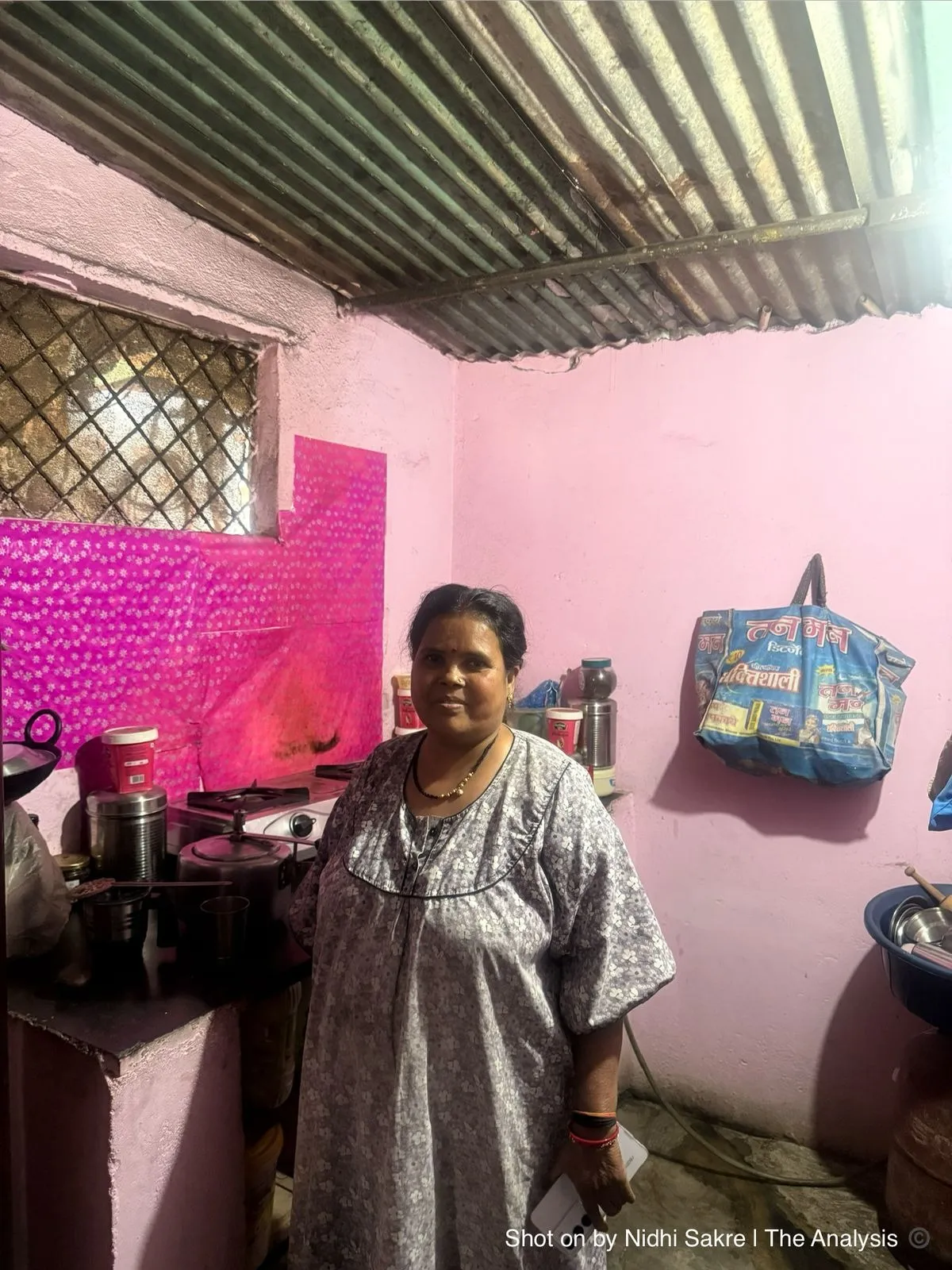
Her kitchen sits in a small corner of the house with almost no ventilation. When the stove burns during the afternoon, the heat from the flame mixes with the heat trapped by the tin roof. So most meals are prepared early in the morning.
The ongoing LPG crisis has further intensified the heat challenge. Several residents reported having begun relying again on traditional chulhas instead of LPG cylinders because of the increasing price of fuel.
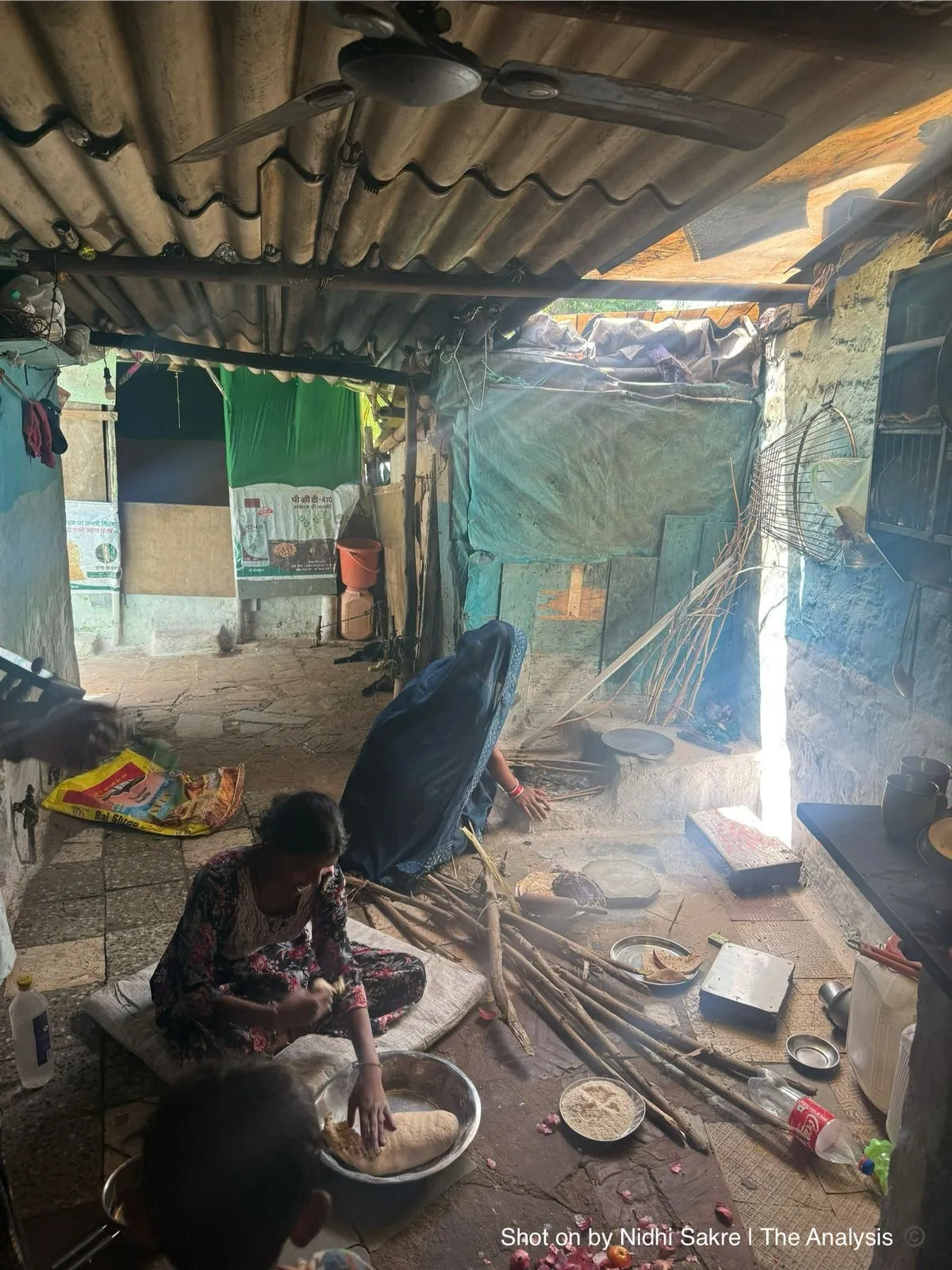
The smoke and heat from these stoves often make the kitchen one of the hottest spaces inside the house, and because cooking and household work are largely managed by women, it is they who spend the longest hours in these overheated spaces, quietly carrying the burden of heat indoors.
Bhopal has historically enjoyed a relatively moderate climate compared to many central Indian cities. However, in recent years, the city has begun experiencing longer and more intense summer heat, reflecting broader climatic changes across central India.
According to the India Meteorological Department (IMD), temperatures in Bhopal have increasingly crossed the 40°C mark during peak summer months, with several heatwave days recorded in recent years. In 2023, for instance, the city recorded temperatures above 42°C during May, highlighting the growing intensity of summer heat in the region.
According to meteorological assessments, there is an increasing trend in the frequency of heatwaves across India’s heat core zone, which includes the northern plains and central India, making states such as Madhya Pradesh increasingly exposed to prolonged summer heat.
Researchers also point to rapid urban expansion as a contributing factor. Over the past few decades, Bhopal has transformed from a relatively low-density city into a rapidly expanding urban center. This growth has brought increased construction, road development, and the conversion of green spaces into built-up areas.
| A climate research on Madhya Pradesh notes that large cities can experience what is known as the “urban heat island effect”, where urban areas become warmer than surrounding regions due to the concentration of built infrastructure and human activities. This phenomenon occurs because cities absorb and retain more heat compared to nearby rural landscapes, leading to higher local temperatures, particularly during the summer months. |
Experts have also raised concerns that many Heat Action Plans in Indian cities focus primarily on outdoor heat, overlooking the risks posed by indoor heat exposure in informal settlements. A review of city-level heat action strategies published in the journal PLOS Climate found that only a small number of cities have explicitly addressed the problem of indoor heat vulnerability, despite growing evidence of its health impacts.
Naman Gupta, State Project Manager at UNDP in Madhya Pradesh, told MP In Focus that “reducing heat stress in India’s informal settlements demands a shift from reactive relief to preventive, design-led, and policy-driven action. Integrating cool roofing, heat-reflective materials, and improved cross-ventilation into existing housing can significantly lower indoor temperatures at low cost.”
She added, “Coupled with green landscaping to reduce urban heat islands and community-level awareness on climate and health risks, these measures can build immediate resilience. At the systems level, embedding heat mitigation strategies within State Health Sector Climate Action Plans—and explicitly incorporating preventive heat stress measures into Disaster Management Plans—will ensure that vulnerable populations are protected not just during heatwaves, but as a sustained public health priority.”
Nidhi Sakre is a research associate at The Analaysis. She is a recent postgraduate in media governance from Jamia Millia Islamia, New Delhi.
TA is a Bhopal-based policy and development consulting group. We are on a mission to make the development space more inclusive and democratic for students and professionals. Join us on this mission.